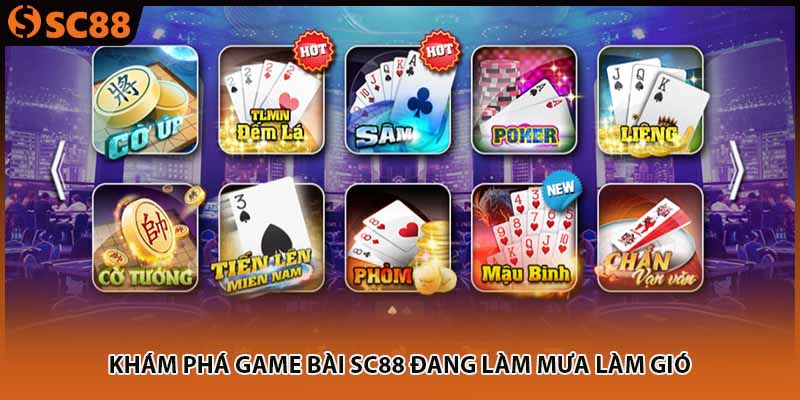
The Nature of Card-Based Gameplay at SC88
Unlike automated gameplay systems, card-based environments require continuous awareness of both personal strategy and opponent behavior, creating a dynamic environment where outcomes are influenced by choices rather than repetition.
Players are not only reacting to cards but also interpreting patterns, pacing, and opponent tendencies, offering depth and variety across repeated sessions.
Beyond Simple Gameplay
At the core of SC88’s card systems lies decision-making under changing conditions, where each decision builds upon previous outcomes.
Different Game bài sc88 opponents and table conditions require flexible strategies, while still rewarding consistency and experience.
- Classic Card Formats: Maintains balance between accessibility and depth.
- Competitive Tables: Highlights real-time decision-making dynamics.
- Quick-Play Card Modes: Designed for shorter sessions with faster pacing.
- Advanced Strategy Games: Offers deeper layers of gameplay complexity.
Interaction Between Players
Observing patterns, timing actions, and interpreting behavior become essential skills, adding a psychological layer to the experience.
Over time, players develop a sense of rhythm within the table, enhancing both engagement and strategic awareness.
Game Flow and Table Rhythm
Card sessions at SC88 follow a natural progression shaped by player interaction, allowing tension and strategy to build organically.
Maintaining rhythm is essential for effective play, influencing overall outcomes without relying solely on chance.
System Design and Fair Interaction
This stability allows players to focus on strategy rather than system inconsistencies, reinforcing confidence in the gameplay environment.
Players can execute decisions quickly without technical delay, which is essential in strategy-based environments.
Long-Term Skill Development
This progression creates a sense of growth over time, making each session more meaningful than the last.
The more players engage, the more refined their decision-making becomes, even after extended use.
Closing Perspective
Players are continuously challenged to think, adapt, and respond, making each session both engaging and intellectually rewarding.